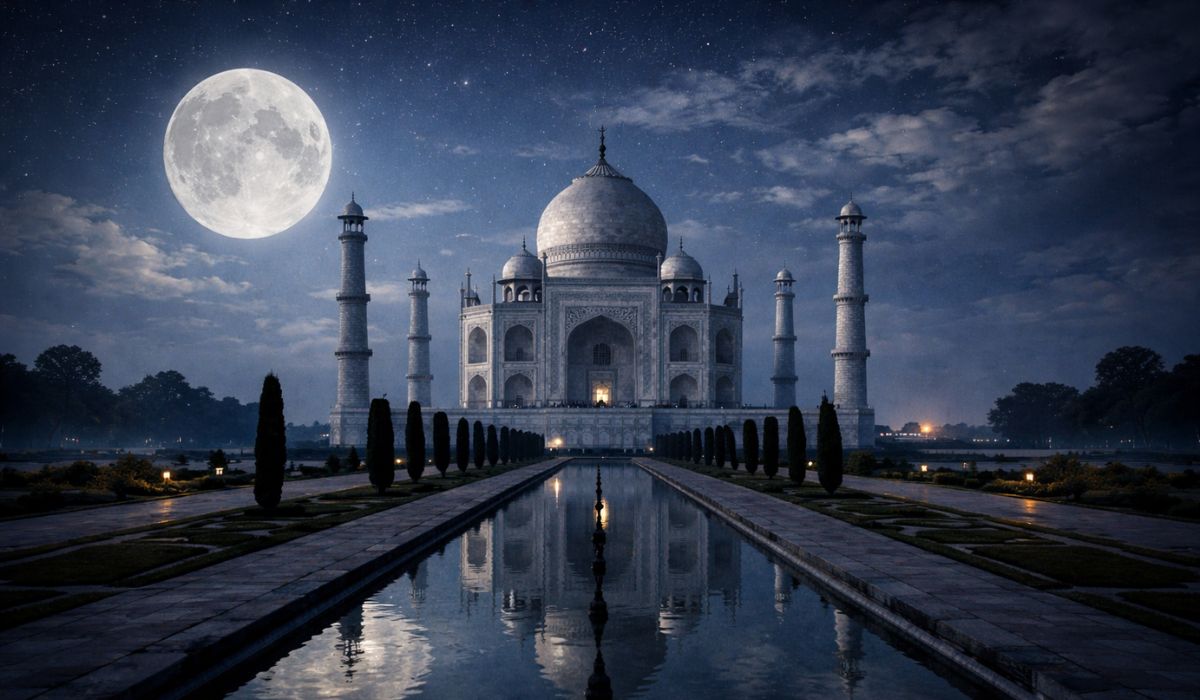
Introduction – Taj Mahal Night & Full-Moon Photography Guide
There are moments at the Taj Mahal that feel unreal — but nothing compares to seeing the white marble glow under a silver full moon. The crowds are gone, the air is quiet, and the monument that looks golden at sunrise now turns soft, pale, and almost luminous. Shadows deepen, reflections sharpen, and the Taj feels less like a monument and more like a dream suspended in moonlight.
For photographers, this is not just a visit. It is a rare opportunity to capture the Taj Mahal in its most dramatic, mysterious, and visually powerful form — a side of the monument that very few people ever witness.
This Taj Mahal Night & Full-Moon Photography Guide explains exactly how night viewing works, when you can go, what rules apply, and how to plan your photography session so you don’t miss the chance to capture this once-in-a-lifetime shot.
Can You Visit and Photograph the Taj Mahal at Night?
Yes — but only on very limited, carefully controlled nights each month.
The Taj Mahal opens for night viewing only five nights per lunar cycle:
- The full moon night
- Two nights before
- Two nights after
These are the only dates when visitors are allowed inside the Taj complex after sunset. This restriction is what makes full-moon photography so special — and so difficult to plan without the right information.
30-Minute Viewing Slots
Night viewing is not open entry. Visitors are allowed in small batches for 30-minute slots. Each group is escorted to a designated viewing area from where you can see and photograph the Taj Mahal under moonlight.
This means:
- You have very limited time to shoot
- You must know what angles to prioritize
- You cannot wander freely like during daytime visits
For photographers, preparation is everything.
The Ticket System (Advance Planning Required)
Night tickets are not sold at the main gate like regular entry tickets.
They must be purchased in advance from authorized counters with valid ID proof. Slots fill quickly around full moon dates because this experience is rare and highly sought after by travelers and photographers alike.
Without advance planning, most visitors simply miss the opportunity.
Strict Rules You Must Follow
Night viewing comes with tighter security and photography restrictions than daytime visits:
- Tripods are not allowed
- Limited camera gear is permitted
- Bags and accessories are restricted
- Entry is allowed only at the assigned reporting time
- Movement is restricted to designated viewing points
These rules are the reason many photographers struggle to get good night shots — they arrive unprepared for the limitations.
This is why many serious photographers prefer planning their visit with an Agra Overnight Tour with Taj Mahal Photography, where timings, permissions, and the best shooting strategy are already handled, allowing you to focus purely on capturing the shot instead of worrying about logistics.
Night photography at the Taj Mahal is not about luck.
It is about understanding the system, respecting the rules, and preparing for the short window of opportunity when the marble monument transforms into a glowing silver masterpiece.
In the next sections, you’ll learn exactly how to make the most of those 30 minutes.
Taj Mahal Full Moon Viewing Dates, Timings & Ticket Process
This is the part most blogs confuse people with.
They tell you “Taj Mahal opens on full moon nights” — but they don’t explain how the system actually works on the ground.
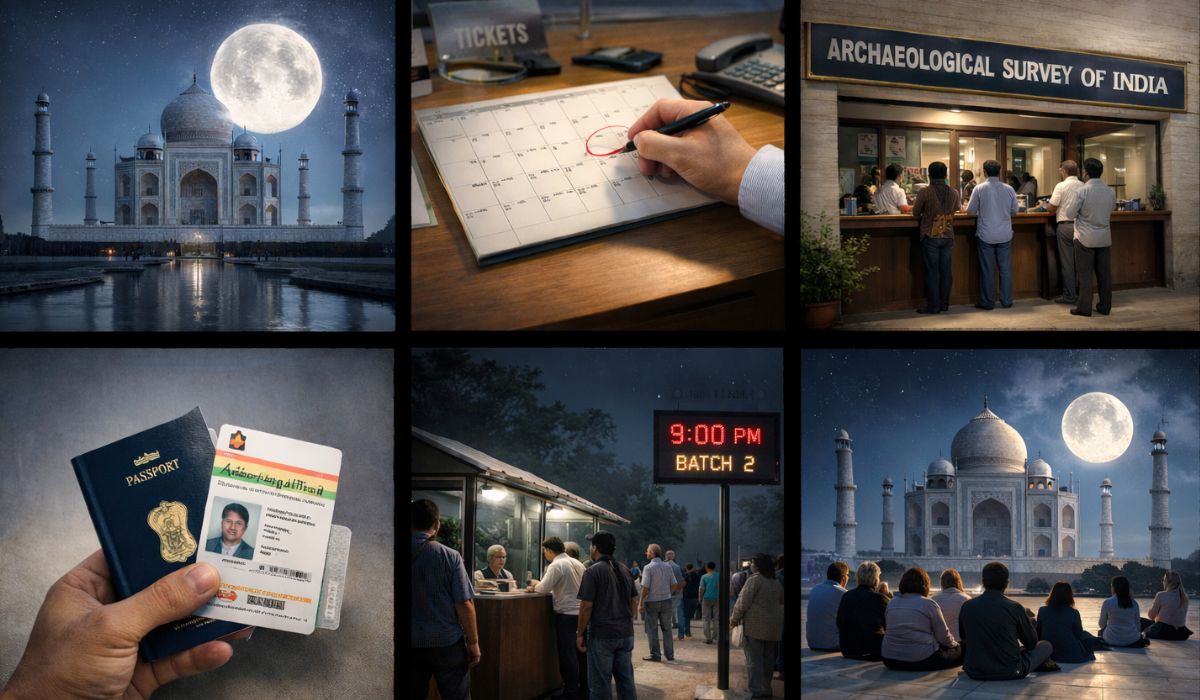
Here is the exact step-by-step process photographers and visitors must follow to successfully attend a Taj Mahal full-moon night viewing.
Step 1: Know When the Night Viewing Happens
Night viewing is allowed only five nights in a lunar month:
- Full moon night
- Two nights before the full moon
- Two nights after the full moon
If the full moon falls on a Friday, night viewing is usually not permitted because the Taj Mahal remains closed on Fridays.
These dates change every month based on the lunar calendar, so you must check the exact dates before planning travel.
Step 2: When Do Tickets Open?
Tickets for night viewing are not sold on the same day.
They usually open for booking one day before the viewing date, during office hours.
Because the number of visitors allowed each night is very limited, tickets often get booked quickly — especially on the exact full moon night.
For photographers, this means you cannot plan last minute. You must be in Agra already and ready to purchase as soon as booking opens.
Step 3: Where to Buy the Tickets
Night viewing tickets are sold from the Archaeological Survey of India (ASI) office counter in Agra, not at the Taj Mahal entry gate.
You must physically go to the counter to purchase the ticket. Online booking is generally not available for night viewing.
This is one of the biggest reasons visitors miss the opportunity — they assume tickets are available at the monument like regular entry.
Step 4: ID Requirements (Very Important)
You cannot buy or use a night viewing ticket without valid identification.
You must carry:
- Government-issued photo ID (passport, Aadhaar, driving license, etc.)
- The same ID must be shown again at the time of entry
Name on the ticket and ID must match.
Without ID, entry is denied even if you have the ticket.
Step 5: Reporting Time on the Night
Your ticket will mention a specific reporting time and batch number.
Night viewing is organized in small groups, each allowed inside for 30 minutes.
You must report 30 minutes before your assigned slot at the security checkpoint. Late arrivals are usually not accommodated because batches move in a fixed sequence.
Security checks are stricter than daytime visits, and only limited items are allowed inside.
Step 6: What Happens During the 30-Minute Viewing Window
This is where photographers need to be mentally prepared.
You are escorted as a group to a designated viewing platform inside the Taj complex. Movement is restricted, and you cannot roam freely around the monument.
During these 30 minutes:
- You must shoot from the assigned area
- Tripods are not allowed
- You must work quickly and calmly
- You cannot request extra time
- Security staff will escort the group out once time ends
This is why planning your shots before entering is crucial. There is no time to experiment randomly.
Why This Process Confuses Most Visitors
Most guides simply say “visit on full moon for night view”.
But in reality, you must:
- Be in Agra on the correct date
- Buy tickets from the ASI office in advance
- Carry valid ID
- Arrive early for your time slot
- Be ready to photograph within strict limitations
Understanding this process is what separates a missed opportunity from a successful Taj Mahal full-moon photography experience.
Why the Taj Mahal Looks Completely Different in Moonlight
In daylight, the Taj Mahal is bright, detailed, and symmetrical. At sunrise, it turns golden and soft. But under a full moon, the monument transforms into something almost unreal.
The white Makrana marble does not reflect moonlight the way it reflects sunlight. Instead of shining, it glows. The surface absorbs the faint lunar light and releases it as a gentle silver radiance. Edges soften, shadows deepen, and fine details fade into smooth gradients of light and dark.
Psychologically, this changes how we see the monument. In the day, you admire the architecture. At night, you feel the presence of it. The Taj stops looking like a structure and starts looking like a floating silhouette carved from light itself.
For photographers, this means you are no longer shooting details — you are capturing mood, contrast, and atmosphere.
Best Camera Settings for Taj Mahal Night And Full-Moon Photography
Night photography at the Taj Mahal is challenging because of low light and tripod restrictions. Correct settings are the difference between a blurry photo and a dramatic moonlit masterpiece.
ISO Range
Use ISO between 800 to 3200 depending on your camera’s low-light capability. Modern mirrorless and DSLR cameras handle higher ISO well without excessive noise.
Shutter Speed Without Tripod
Aim for 1/10 to 1/30 seconds. This is slow, but manageable with proper body support and stabilization techniques.
Aperture Choice
Use a wide aperture such as f/1.8 to f/3.5. This allows maximum light and keeps shutter speed manageable.
Lens Recommendations
- 24mm or 35mm for wide monument shots
- 50mm for balanced composition
- 85mm for marble details and dome focus
Fast prime lenses work best in moonlight.
Manual Focus at Night
Autofocus struggles in low light. Switch to manual focus and focus on the edge of the dome or the main arch where contrast is visible.
White Balance for Marble
Set white balance to Tungsten or 3200K–3800K to preserve the natural silver tone of the marble instead of making it look yellow.
How to Shoot Without Tripod (Pro Techniques)
Tripods are not allowed during night viewing, but you can still get sharp images using these methods.
Wall Support
Lean against a wall or pillar. Press your elbows into your body to create stability.
Ground Support
Place the camera on a railing, platform edge, or even your camera bag for support.
Burst Shots
Use burst mode. Even if 4 shots blur, the 5th will often be sharp due to micro-stability.
Image Stabilization Tricks
Turn on lens or in-body stabilization. Control your breathing and gently press the shutter instead of tapping it.
These small techniques make a huge difference in low light.
Best Viewpoints for Night & Full-Moon Photography
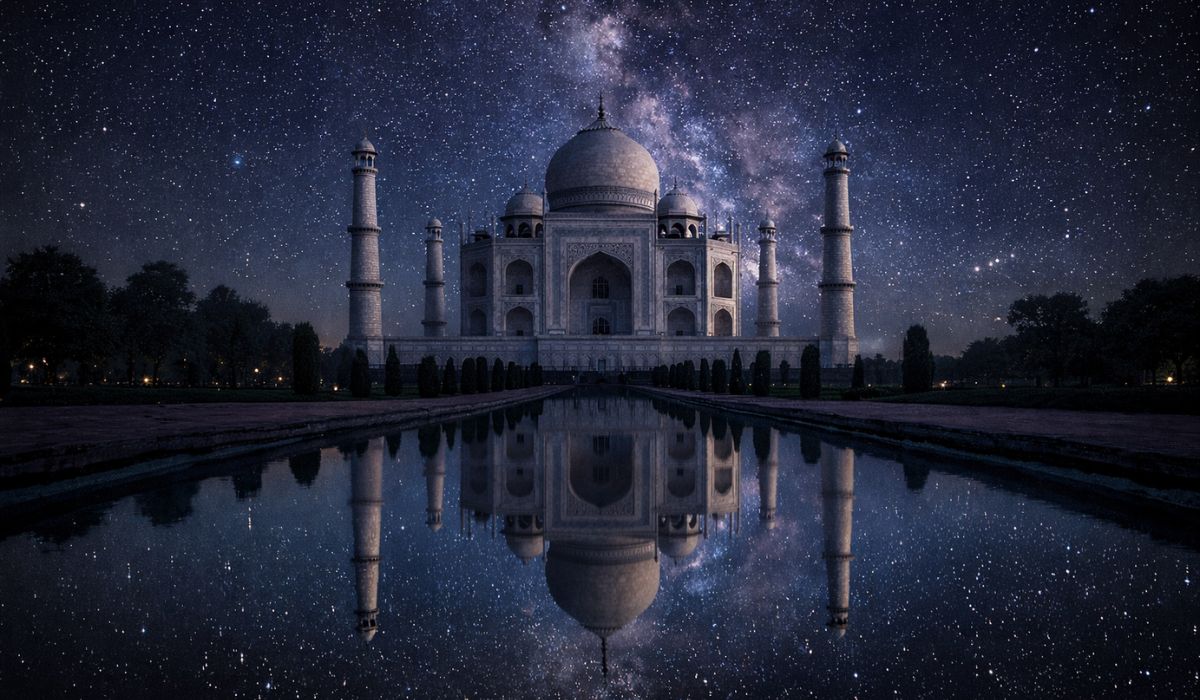
Inside Taj Complex (Full Moon Slot)
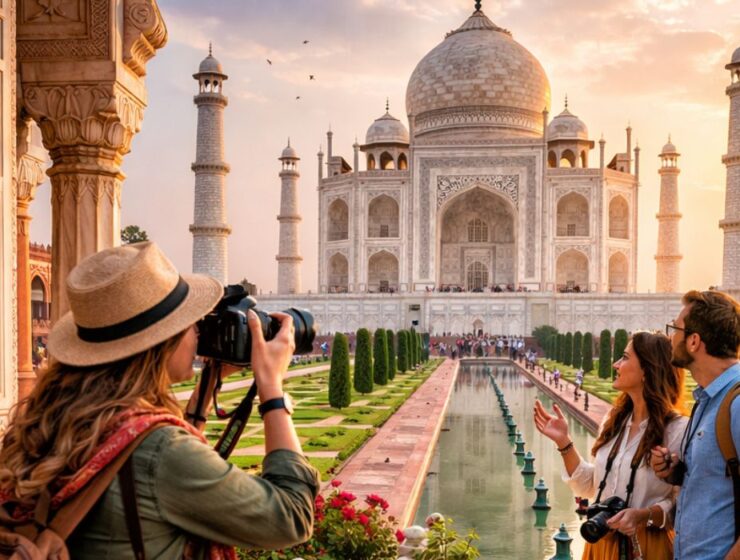
You will shoot from a designated platform. Focus on symmetry, central framing, and the glowing dome.
Mehtab Bagh (Best Reflection)
Located across the Yamuna River, this garden offers the most famous reflection shots of the Taj under moonlight.
Yamuna River Side
Raw, less crowded, and perfect for creative angles with water and moon reflection.
Rooftop Cafes & Hotels
Some rooftops in Agra offer distant but beautiful moonlit views, ideal for long focal length shots.
Mehtab Bagh — The Secret Spot for Moonlight Taj Shots
Mehtab Bagh is often overlooked by regular tourists but loved by photographers. From here, you can capture the Taj Mahal with the Yamuna River in the foreground and the moon above the dome.
This angle creates depth, reflection, and symmetry that is impossible inside the main complex at night.
If your goal is a dramatic, portfolio-worthy moonlight shot, Mehtab Bagh is essential.
Step-by-Step Full Moon Photography Plan
This simple plan helps you use your 30 minutes wisely.
| Time | What to Shoot |
| Arrival | Setup settings, test exposure, check focus |
| Moon rising | Wide frame including moon and full structure |
| Mid slot | Perfect symmetry shots of dome and minarets |
| Last 5 mins | Zoom into marble glow, arches, and details |
Following a plan prevents panic and wasted time.
Sunrise vs Full-Moon Photography at Taj Mahal
| Sunrise | Full Moon |
| Golden tones | Silver tones |
| Soft shadows | High contrast |
| Easier shots | Dramatic shots |
| More movement freedom | Restricted movement |
Both are magical, but full moon photography is rare and visually dramatic.
Photography Rules You Must Know (Avoid Fines)
- Tripods are not allowed
- Drones are strictly prohibited
- Large camera bags are restricted
- Security checks are strict
- Follow assigned viewing area rules
Respecting these rules ensures a smooth experience.
Best Gear Checklist for Night Taj Photography
- DSLR or mirrorless camera
- Fast prime lens (f/1.8 or f/2)
- Extra batteries
- Microfiber cloth for lens
- Minimal gear for easy security check
- Camera strap for stability
Why Photographers Prefer Guided Taj Mahal Photography Tours
Night photography at the Taj Mahal requires timing, planning, and knowledge of angles. Guided photography tours help photographers by:
- Managing ticket process and timing
- Suggesting best viewpoints
- Helping with camera setup
- Planning both night and sunrise sessions
This allows you to focus entirely on capturing the perfect shot instead of managing logistics.
Final Pro Tips for Capturing the Perfect Taj Mahal Night Shot
- Arrive mentally prepared with settings pre-decided
- Prioritize composition over experimentation
- Shoot more frames than usual
- Stay calm and steady while shooting
- Use the moon as part of the composition when possible
The Taj Mahal under a full moon is not just a photograph. It is a rare visual story that very few photographers ever get to capture.
Ready to Capture the Taj Mahal in Moonlight?
Night and full-moon photography at the Taj Mahal is rare, time-restricted, and highly regulated. The difference between getting an average photo and a breathtaking moonlit masterpiece comes down to planning, timing, and knowing exactly where and how to shoot.
If you want everything arranged — from ticket timing and entry planning to the best viewpoints and camera guidance — explore our dedicated Taj Mahal Photography Tour experiences:
Let the logistics be handled, so you can focus only on capturing the perfect frame.
FAQ – Taj Mahal Night & Full-Moon Photography Guide
Can we take photos of the Taj Mahal at night?
Yes. Photography is allowed during the official night viewing on full moon nights and two days before and after, but only from designated viewing areas under strict rules.
How many nights is the Taj Mahal open for night viewing?
Only five nights per lunar month: the full moon night, plus two nights before and two nights after.
Where can I buy tickets for Taj Mahal night viewing?
Tickets must be purchased in advance from the ASI office counter in Agra, not at the Taj Mahal entry gate.
Are tripods allowed for night photography at the Taj Mahal?
No. Tripods are strictly prohibited during night viewing, so photographers must rely on handheld stabilization techniques.
What is the best place to photograph the Taj Mahal at night?
Inside the complex during your 30-minute slot and from Mehtab Bagh across the Yamuna River for reflection and moonlit views.