

Taj Mahal Tours – (2026 Guide)
At first, planning a Taj Mahal visit feels easy. You know where you’re going. You know what you want to see. It all seems straightforward.
Then you start looking at tour options. Same-day trips, sunrise visits, overnight stays, trains, cars. Suddenly, that “simple plan” starts to feel a bit messy.
Most travelers don’t struggle with wanting to see the Taj Mahal. They struggle with deciding how to see it—without standing in heavy crowds, without watching the clock all day, and without feeling like they rushed through something special.
This guide is here to slow that decision down. It explains different Taj Mahal tours in a clear, honest way, so you can choose what fits your time, travel style, and energy level—without stress or second-guessing.
What Are Taj Mahal Tours?
A Taj Mahal tour is less about the ticket and more about the experience around it. It’s the timing of your visit, the route you take, how fast the day moves, and whether the visit feels calm or chaotic.
Some tours are built to move quickly. Others are designed to let you pause, look around, and actually absorb the place. A few focus heavily on photography, while others are about comfort or cultural context. None of these are wrong—but they feel very different once you’re there.
Knowing these differences early helps avoid common regrets. Things like arriving at the busiest hour, feeling rushed through the complex, or leaving with the sense that you didn’t really experience the Taj Mahal at all.
This page focuses on understanding tour styles and travel choices. If you already know you want a pre-arranged option with transport and tickets handled, you can explore our Taj Mahal tour packages separately.
Types of Taj Mahal Tours
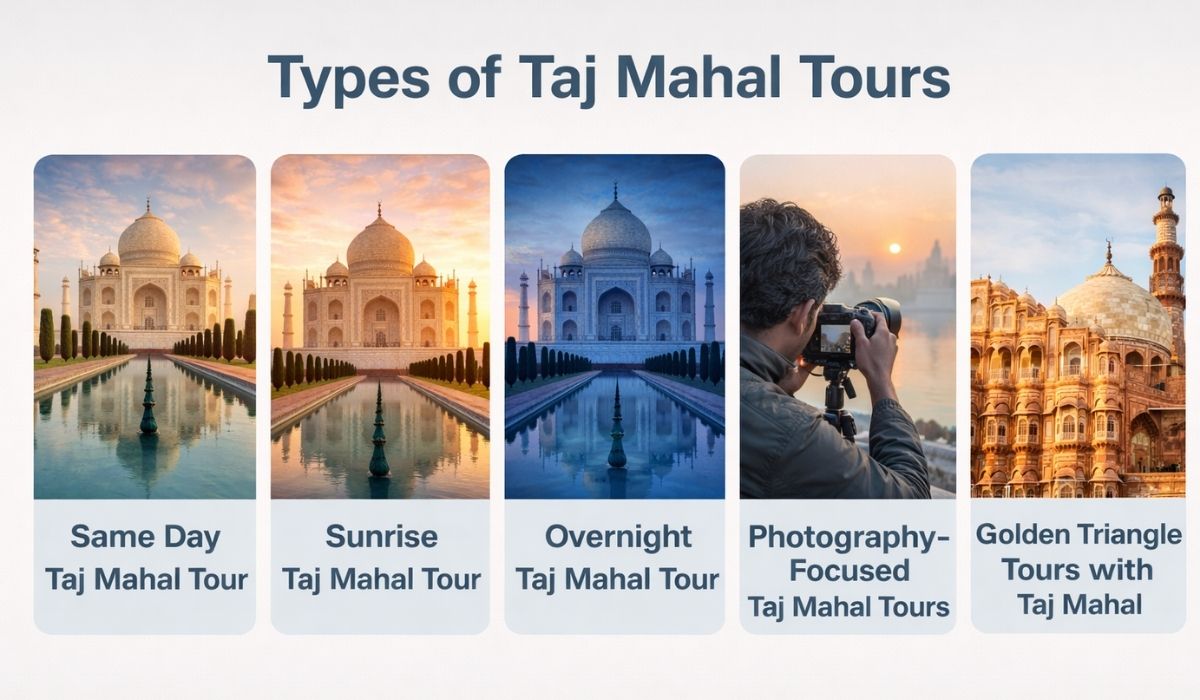
There isn’t one “best” Taj Mahal tour that works for everyone. The right choice depends on how much time you have, how much energy you want to spend, and what kind of experience you’re hoping to walk away with.
Some people want efficiency. Others want atmosphere. A few want time—lots of it. Knowing where you fall makes everything else easier.
Same Day Taj Mahal Tour
A same-day Taj Mahal tour is built for travelers who need to fit the visit into a tight schedule. These tours usually start early in the morning and wrap up by evening, often with travel from Delhi or nearby cities.
The pace is quicker, there’s no denying that. But when the timing is planned well, you still get enough space to enjoy the monument without feeling like you’re constantly being pushed forward.
This option tends to work well for business travelers, short-stay visitors, and anyone who wants a complete experience without staying overnight.
Sunrise Taj Mahal Tour
Sunrise tours are chosen less for convenience and more for how the Taj Mahal feels at that hour. Early morning light softens the marble, the crowds are thinner, and the entire complex feels calmer.
For many travelers, this quiet atmosphere makes a real difference. Couples, first-time visitors, and those who enjoy peaceful moments often find sunrise visits far more memorable than daytime ones—even if it means waking up early.
Overnight Taj Mahal Tour
An overnight Taj Mahal tour changes the rhythm of the visit completely. Instead of rushing through everything in one long day, you stay in Agra and give the experience some breathing room.
This slower pace suits families, relaxed travelers, and anyone who doesn’t enjoy being on the clock all day. Many overnight tours include a sunset visit on one day and a sunrise visit the next, which allows you to see the monument in two very different moods.
Photography-Focused Taj Mahal Tours
Photography-focused Taj Mahal tours are planned around light, timing, and viewpoints—not speed. These tours allow extra time in specific areas and are scheduled to avoid the busiest hours whenever possible.
They’re a good fit for photographers, content creators, and travelers who care more about capturing the moment than rushing through it. Even if you’re using just a phone, the slower pace and better timing usually lead to much stronger photos.
Golden Triangle Tours with Taj Mahal
Golden Triangle tours include the Taj Mahal as part of a longer journey through Delhi, Agra, and Jaipur. Instead of focusing on a single site, these tours place the Taj Mahal within a broader cultural and historical context.
They’re especially popular with first-time visitors to India who want to understand the country beyond one monument. If you enjoy variety and storytelling across cities, this type of tour often feels more complete.
Tours from Delhi

Many travelers start their Taj Mahal tour from Delhi, and the way you travel from there can shape the entire day. It’s not just about distance—it’s about how rested you feel when you arrive and how much energy you have left for the visit.
Two options are most common: going by car or by train. Both work well, but they feel very different once you’re actually on the move.
By Car
Car-based tours offer flexibility and door-to-door comfort. You leave directly from your hotel, stop when needed, and don’t have to worry about train schedules or stations.
This option works well for families, small groups, and travelers who value privacy. The downside is that long road journeys can feel tiring, especially if the day is tightly packed. Traffic and early starts can also affect how relaxed you feel by the time you reach the Taj Mahal.
By Train
Train-based tours are often faster and more predictable. Superfast trains between Delhi and Agra reduce travel time and remove the stress of long highway drives.
Many solo travelers and international visitors prefer trains because the journey is smoother and less exhausting. You arrive feeling fresher, which can make a noticeable difference during the Taj Mahal visit itself.
Once travelers understand these differences, many choose Taj Mahal tour packages from Delhi that match their preferred travel style and energy level.
How to Choose the Right Taj Mahal Tour
Choosing the right Taj Mahal tour gets easier once you stop thinking about what’s “popular” and start thinking about what actually fits your situation.
If you have only one day, a same-day or sunrise tour usually makes the most sense. It keeps things focused and avoids unnecessary travel stress.
Traveling as a couple? Sunrise or overnight tours tend to feel more personal and less rushed. There’s more space to enjoy the moment without constantly watching the clock.
Families often prefer overnight tours. They spread the experience out and reduce fatigue, especially when kids or older travelers are involved.
If photography matters to you, specialized tours are worth considering. They move at a slower pace and are planned around light, not speed.
And if crowds drain your energy quickly, early-morning visits or off-season travel can make a huge difference.
In the end, the best tour isn’t the one everyone talks about. It’s the one that fits your priorities without forcing compromises.
Best Time and Timing for Taj Mahal Tours
Timing can completely change how the Taj Mahal feels.
Sunrise visits are calm, quieter, and softer in light. The monument feels peaceful, and the experience is easier to absorb. Midday visits are brighter but noticeably more crowded, which can take away from the atmosphere.
Winter months—from October to March—are generally the most comfortable for sightseeing. Summers can still work, but they require early starts, breaks, and realistic expectations.
Foggy winter mornings are something many travelers don’t plan for. Visibility can be low on some days, so flexibility is important. Knowing this ahead of time helps avoid disappointment and rushed decisions.
Taj Mahal Tours vs Independent Visit
Some travelers prefer to visit the Taj Mahal independently, while others feel more comfortable with a guided tour. Both approaches can work—it depends on how much planning you want to handle yourself.
Independent visits offer freedom, but they also mean managing tickets, timing, and logistics on your own. For first-time visitors, this can sometimes feel overwhelming.
Taj Mahal tours reduce that uncertainty. They help manage crowd timing, provide historical context, and keep the day organized. The difference usually shows in how relaxed the experience feels—not just in what you see, but in how you remember it afterward.
FAQs About Taj Mahal Tours
How long does a Taj Mahal tour usually take?
Most visitors spend around 2–3 hours at the Taj Mahal itself. Full-day or overnight tours take longer because they include travel time and other stops.
Is one day enough to see the Taj Mahal properly?
Yes, one day can be enough if the visit is planned well. Many travelers see the Taj Mahal in a single day and don’t feel rushed at all.
Which Taj Mahal tour is best for first-time visitors?
Sunrise and overnight tours tend to be the most comfortable. They offer better timing, fewer crowds, and a more relaxed experience overall.
Are guides necessary at the Taj Mahal?
Guides aren’t required, but they do help. They explain the history, point out details you might miss, and help manage time inside the complex.
Can I visit the Taj Mahal without booking a tour?
Yes, it’s possible to visit on your own. That said, tours often make things easier by handling transport, timing, and crowd-related planning.
Final Thoughts: Choosing Your Tour
A Taj Mahal visit isn’t really about checking a famous place off a list. It’s about how the experience stays with you afterward—whether it felt peaceful, rushed, confusing, or genuinely meaningful.
The right tour gives you space to slow down, take things in, and understand what you’re seeing, instead of constantly worrying about time or logistics. When the pace feels right, the monument speaks for itself.
Once you’re clear on which Taj Mahal tour fits your travel style, choosing a well-organized option becomes much easier. That’s why many travelers eventually lean toward Taj Mahal tour packages that take care of timing, transport, and entry—especially when time is limited and simplicity matters.