Delhi to Agra Taj Mahal Distance : Everything You Actually Need to Know Before Visiting the Taj Mahal (2026)
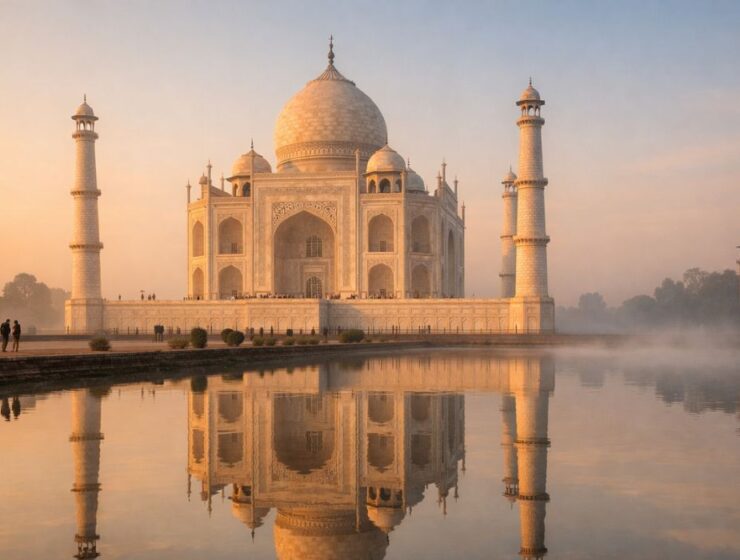
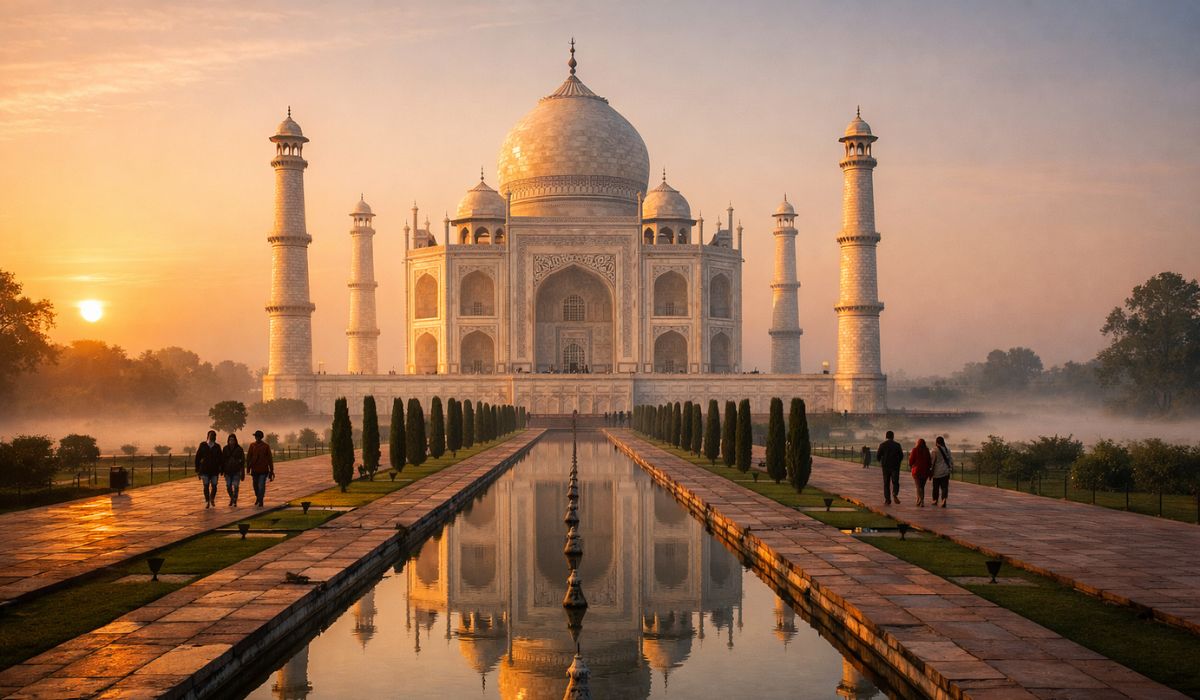
There’s a moment, somewhere around sunrise, when the mist still sits low over the Yamuna and the Taj Mahal’s white marble catches the first pale light of morning — and every cliché you’ve ever heard about this place suddenly makes complete sense.
For many travelers planning the Delhi to Agra Taj Mahal distance, this is the moment they’re really chasing. You’ve seen the photographs a thousand times. You think you know what to expect. And then you’re standing there, and you realize photographs don’t come close.
If you’re planning a trip from Delhi, this is the honest, practical guide you need. Not a list of obvious facts recycled from every other travel website, but real information that helps you plan a trip worth remembering.
What is a Distance of Delhi to Agra Taj Mahal, Really?
The straight answer is 230 kilometers via the Yamuna Expressway. By car, that’s roughly 3 to 4 hours depending on when you leave and how Delhi’s morning traffic treats you. By train — specifically the Gatimaan Express or Shatabdi Express — you’re looking at just 1.5 to 2 hours, though you’ll need another 30 to 45 minutes from Agra Cantt station to reach the monument itself.
What surprises most first-time visitors is how manageable the journey actually is. Delhi to Agra is not an expedition. It’s a morning drive — and with the right planning, you can be standing in front of one of the world’s most iconic buildings before most people in Delhi have finished their breakfast.
For travelers planning a Taj Mahal Sunrise Tour, this timing becomes even more important. The distance isn’t the hard part. The timing is everything.
Which Way Should You Actually Travel?
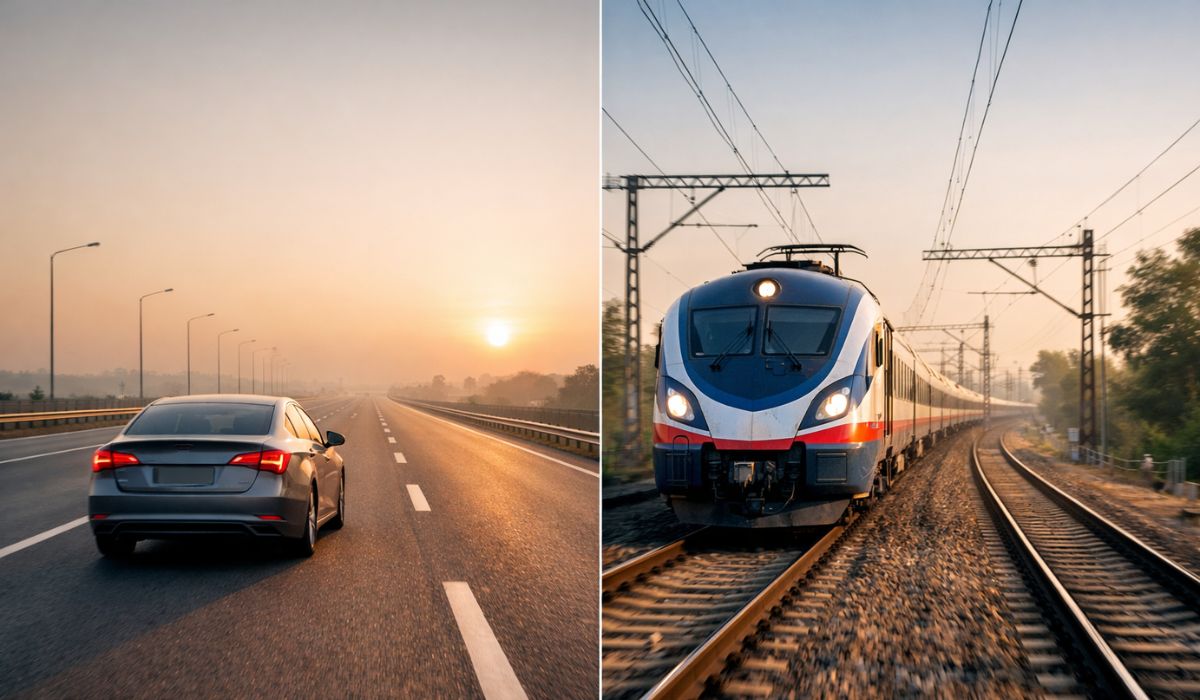
By Private Car — Best for Flexibility and Comfort
If you’re traveling as a couple, a family, or a photographer with equipment, a private car is the most practical and comfortable choice available. You leave when you want, stop when you want, and return to Delhi entirely on your own terms. The Yamuna Expressway is well-maintained, well-lit, and one of the smoothest long drives in the region. There are clean rest stops along the way, and the road itself is designed for speed without being stressful.
Leave Delhi by 5 AM and you’ll reach Agra before the heat and crowds build up. That early start makes an enormous difference — both in how you experience the monument and how the rest of your day unfolds. A private car also gives you the freedom to include Agra Fort, Mehtab Bagh, or other nearby sites without worrying about train schedules or shared transport logistics.
By Train — Best for Speed
The Gatimaan Express is genuinely impressive. It covers the Delhi to Agra route in about 100 minutes and runs a smooth, comfortable service. If you’re a solo traveler or a pair comfortable navigating Agra’s local transport once you arrive, this is the fastest option available and a perfectly enjoyable journey in its own right.
The caveats are real though. You’ll need to book tickets well in advance — especially on weekends and during peak tourist season between October and March. You’re locked into a fixed departure and return schedule, which can feel rushed if you want a relaxed experience. And from Agra Cantt station, you still need a taxi or auto-rickshaw to reach the Taj Mahal, which adds both time and the mild adventure of negotiating local fares.
By Bus — Only If Budget Is the Priority
Buses between Delhi and Agra take 4 to 5 hours, sometimes longer depending on traffic and the number of stops. The journey is noticeably less comfortable than either a private car or train. Unless keeping costs to an absolute minimum is your main concern, most travelers find the extra time and physical fatigue simply not worth it — particularly if you’re trying to make the most of a single day and need your energy for the actual visit.
The Best Time to Go — And Why It Actually Matters
October through March is when Agra is at its most welcoming. The weather is cooler, the skies are cleaner, and walking across marble courtyards doesn’t feel like crossing a hot griddle. December and January bring a pleasant chill to the mornings, which makes the early sunrise visit even more atmospheric. February and March offer warmer days while still being comfortable enough to explore without exhaustion.
Avoid April through June unless you have a specific reason to go and a high tolerance for heat. Temperatures in Agra regularly climb past 40 degrees Celsius during these months, and standing on white marble under a midday sun in peak summer is an experience that tests even the most enthusiastic traveler.
Within the day itself, sunrise is genuinely worth setting your alarm for. The crowds at 7 AM are a fraction of what arrive by 10 AM. The light at dawn is soft, directional, and flattering in a way that midday light simply isn’t — which matters whether you’re a serious photographer or just want decent holiday photos. More than the photography, there’s something quietly powerful about standing in front of one of the world’s great buildings with actual space around you, without the noise and press of large crowds. The Taj Mahal at sunrise feels like a private experience. By late morning, it feels like a theme park.
What a Good One-Day Itinerary Actually Looks Like
Leave Delhi at 5 AM. This is non-negotiable if you want the best of the day. Arrive in Agra between 8 and 8:30 AM, ideally timed for when the Taj Mahal opens. Spend two to three unhurried hours inside — walk the full length of the gardens, approach slowly, sit with it for a while. Don’t rush the inner chamber; the inlay work up close is extraordinary and most visitors walk past it too quickly.
By midday, Agra Fort is a 10-minute drive away and deserves at least two hours of your time. Most people skip it entirely, focusing everything on the Taj Mahal, and almost universally say afterward they wished they’d gone. It’s a remarkably well-preserved Mughal fortress with sweeping views back toward the Taj Mahal across the river — a completely different perspective on the same monument.
Have a proper lunch, ideally somewhere with air conditioning, and rest through the hottest part of the afternoon between 1 and 3 PM. This is not laziness — it’s sensible planning. If you can, stay for sunset. The Taj Mahal in late afternoon golden light is a completely different visual experience from the cool blue-white of the morning, and many people find it even more beautiful. Head back toward Delhi by 6 or 7 PM and you’ll be home by 10 at the latest.
If you have an extra day, use it. Stay overnight in Agra. The city quiets down considerably after the day-trippers leave, the monument is less crowded again the following morning, and you’ll leave with a much richer sense of having actually experienced the place rather than simply passed through it.
Things Most Travel Guides Don’t Bother Mentioning
The Taj Mahal is closed every Friday for prayers. This sounds like a small detail until you’ve planned your entire trip around a Friday departure and find yourself standing at a locked gate. Double-check your dates before booking anything.
You cannot enter without a valid government-issued photo ID. This is strictly enforced. Carry your passport, Aadhaar card, or equivalent — and make sure it’s physically with you, not sitting in your hotel room.
Shoe covers are provided free at the main entrance, but the marble gets genuinely hot by late morning. If you’re visiting during warmer months and arriving after 9 AM, thick socks are worth carrying. Photography inside the main mausoleum is restricted, so if you’re coming specifically to photograph the interior, manage your expectations before you arrive.
Agra’s local transport — primarily auto-rickshaws and cycle rickshaws — is an experience in itself. Prices are negotiable and the journeys are chaotic and charming in equal measure. If you’d rather not deal with it, arrange for your driver to wait.
Is a Same-Day Trip Actually Worth It?
Yes — but only if you approach it with intention. A rushed same-day visit where you arrive at 11 AM, spend 45 minutes taking photographs, and leave by 1 PM is genuinely not worth the journey. The monument deserves more than that, and so does your time.
A well-planned same-day trip — early start, sunrise arrival, unhurried morning, Agra Fort included — is one of the best day trips available anywhere in India. The Taj Mahal is one of those rare places that lives up to its reputation completely, but only if you give it the time and attention it deserves.
Go slowly. Arrive early. Stay longer than you think you need to.
Quick Reference Before You Go
- Total Distance: 230 km from Delhi to Agra
- By Car: 3 to 4 hours via Yamuna Expressway
- By Train: 1.5 to 2 hours, plus 30 to 45 minutes local transit
- By Bus: 4 to 5 hours, budget option only
- Best Season: October to March
- Best Time of Day: Sunrise
- Closed: Every Friday
- Must Carry: Valid government-issued photo ID
- Book in Advance: Entry tickets, especially October through February
FAQs – Delhi to Agra Taj Mahal Distance 2026 guide
What is the exact distance from Delhi to the Taj Mahal?
The exact road distance from central Delhi to the Taj Mahal complex in Agra is 233 kilometers via the Yamuna Expressway. Depending on your starting point in Delhi NCR, the distance can range from 210 kilometers from Noida to 250 kilometers from Gurugram or Faridabad. The railway distance from Hazrat Nizamuddin station to Agra Cantt station is approximately 188 kilometers, but you must add another 6 to 7 kilometers for the local transit from the station to the Taj Mahal.
How long does it take to drive from Delhi to Agra?
A one-way drive from Delhi to Agra takes 3 to 4 hours under normal conditions. If you depart between 5 AM and 6 AM, you can often complete the journey in 3 hours due to lighter traffic. During peak hours, weekends, or foggy winter mornings, the drive may take 4 hours or slightly more. The Yamuna Expressway has a speed limit of 100 kilometers per hour for cars, which helps maintain consistent travel times.
What is the distance from Delhi to Agra by train?
The rail distance from Delhi to Agra is approximately 188 kilometers between Hazrat Nizamuddin station and Agra Cantt station. The Gatimaan Express covers this distance in 1 hour and 40 minutes, while the Shatabdi Express takes about 2 hours. Other express trains may take 2.5 to 3 hours. After reaching Agra Cantt, you will need to travel an additional 6 to 7 kilometers to reach the Taj Mahal, which takes 20 to 30 minutes by taxi or auto-rickshaw.
What is the distance from Delhi to Agra by bus?
The road distance by bus is the same as by car, approximately 230 to 233 kilometers. However, buses take longer due to multiple stops, slower speeds, and occasional detours. A typical bus journey from Delhi to Agra takes 4 to 5 hours. Luxury buses with fewer stops may take closer to 4 hours, while standard government buses can take 5 hours or more.